
Manual Post Hole Diggers: Clamshell Diggers and Hand Augers (2026)
The best manual post hole diggers: clamshell diggers with hardwood and fiberglass handles and a US-made hand auger, compared on blade spread, handle and build.
Affiliate disclosure: product links on this page go to Amazon or to the maker's own store. As an Amazon Associate we earn from qualifying purchases, at no extra cost to you; links to makers' own stores earn us nothing. No retailer or brand sees our picks before they are published or has any say in them. How we choose.
For a few holes, the manual digger to buy is the Seymour 21244 Perfection: a classic clamshell digger with a 13 gauge sharpened blade, a 7.25 inch spread, double-bolted heads and 48 inch hardwood handles. If you want to read the depth without a tape, the VEVOR 57.5 inch digger has scale marks on its fiberglass handles.
Our top picks at a glance
- Seymour 21244 Perfection post hole digger
Type: Clamshell · Spread: 7.25 in · Handle: Hardwood · Length: 48 in handles
- VEVOR 57.5 in post hole digger with depth scale
Type: Clamshell · Spread: 5.71 in hole · Handle: Fiberglass, 3 mm wall · Length: 57.5 in overall
3. Best pro-grade wood handles
Truper 30379 Tru Pro post hole diggerType: Clamshell · Spread: Not stated · Handle: White ash · Length: 48 in handles
- Seymour S500 6 in Iwan hand auger
Type: Iwan hand auger · Spread: 6 in point spread · Handle: Steel shaft, welded T-handle · Length: Not stated
- VNIMTI fiberglass-handle post hole digger
Type: Clamshell · Spread: Not stated · Handle: Fiberglass, non-slip grips · Length: 58 in overall
| Pick | Type | Spread | Handle | Length | Buy |
|---|---|---|---|---|---|
| Seymour 21244 Perfection post hole diggerBest overall | Clamshell | 7.25 in | Hardwood | 48 in handles | Amazon |
| VEVOR 57.5 in post hole digger with depth scaleBest with depth marks | Clamshell | 5.71 in hole | Fiberglass, 3 mm wall | 57.5 in overall | Amazon |
| Truper 30379 Tru Pro post hole diggerBest pro-grade wood handles | Clamshell | Not stated | White ash | 48 in handles | Amazon |
| Seymour S500 6 in Iwan hand augerBest hand auger | Iwan hand auger | 6 in point spread | Steel shaft, welded T-handle | Not stated | Amazon |
| VNIMTI fiberglass-handle post hole diggerBest budget | Clamshell | Not stated | Fiberglass, non-slip grips | 58 in overall | Amazon |
Best overall
Seymour 21244 Perfection post hole digger
A traditional clamshell digger with a 7.25 inch spread and hardwood handles.
- Type
- Clamshell
- Spread
- 7.25 in
- Handle
- Hardwood
- Length
- 48 in handles
Pros
- 13 gauge sharpened blade
- Double bolt connection
Cons
- Wood handles need care
Seymour lists the Perfection pattern with a 13 gauge sharpened blade, a 7.25 inch spread, a double bolt connection and 48 inch precision-turned hardwood handles.
Best with depth marks
VEVOR 57.5 in post hole digger with depth scale
A fiberglass-handle digger with a depth scale printed on the handle.
- Type
- Clamshell
- Spread
- 5.71 in hole
- Handle
- Fiberglass, 3 mm wall
- Length
- 57.5 in overall
Pros
- Scale marks show hole depth as you dig
- No assembly
Cons
- Narrow hole for a 4x4 set in concrete
- Maker lists it for loose, soft soil
VEVOR lists 3 mm thick fiberglass handles, a 50Mn steel blade that cuts a 5.71 inch hole, a 57.48 inch overall length, scale markings on the handle for reading depth, and a weight of 10.14 lb, with no assembly needed (per the Amazon listing). It describes the tool as suited to loose, soft and cultivated soil.
Best pro-grade wood handles
Truper 30379 Tru Pro post hole digger
A heavy-duty digger with 48 inch North American white ash handles.
- Type
- Clamshell
- Spread
- Not stated
- Handle
- White ash
- Length
- 48 in handles
Pros
- Ash handles balance stiffness and flex
- Rated for commercial and farm use
Cons
- Blade spread not listed
Truper lists 48 inch professional-grade North American white ash handles, which it says give the best ratio of resistance and flexibility, for commercial, industrial, farm and ranch use.
Best hand auger
Seymour S500 6 in Iwan hand auger
A US-made 6 inch Iwan auger: twist it down instead of stabbing and lifting.
- Type
- Iwan hand auger
- Spread
- 6 in point spread
- Handle
- Steel shaft, welded T-handle
- Length
- Not stated
Pros
- Made in USA
- Clean, round holes
Cons
- Slow in rocky ground
Seymour lists a steel blade riveted to a pliable iron yoke, a steel shaft with a welded steel T-handle, a 6 inch point spread and general-purpose use in a variety of soils, made in the USA.
Best budget
VNIMTI fiberglass-handle post hole digger
A fiberglass-handle clamshell digger 58 inches long.
- Type
- Clamshell
- Spread
- Not stated
- Handle
- Fiberglass, non-slip grips
- Length
- 58 in overall
Pros
- Light fiberglass handles
- Reinforced head joints
Cons
- Spread and steel gauge not listed
VNIMTI lists heavy-duty steel blades, thickened fiberglass handles with non-slip grips, double-reinforced joints and a 58 inch overall length, for post holes, mailboxes and fencing.
How we chose
We compared blade spread, handle material and length, and build details from the makers' listings.
Clamshell or hand auger?
- Clamshell digger: stab, spread the handles, lift the soil out. Fast in loose soil and good for widening holes.
- Hand auger: twist it down; it bores a round hole and works well in clay and sod, less well in rock.
Handles
Hardwood and ash handles absorb shock and can be replaced; fiberglass resists weather and rot. Longer handles reach deeper holes, but the open span of a clamshell digger limits depth: the deeper the hole, the less room the handles have to spread.
When to switch to power
More than a handful of holes, wide holes for footings, or clay: a gas auger or electric auger saves your back. For bag counts, see how much concrete per fence post.
Call 811 a few business days before digging, even by hand.
Hole size by the post
Quikrete's rule for a post set in concrete is a hole about three times the post's diameter and a third of the post's overall length deep. A 4x4, which measures 3.5 inches, wants a hole of about 10 inches. A clamshell digger with a 7.25 inch spread does not cut that in one bite: you dig the center, then work around the sides to widen it. That is the advantage a clamshell has over an auger of any kind. The hole can be any shape and width you need.
A hand auger is the reverse. Seymour's 6 inch Iwan auger bores a neat 6 inch hole and nothing else, which suits steel posts about 2 inches across and planting, and makes a good pilot for a wider hole.
How much soil comes out
A 10 inch hole 30 inches deep is about 1.36 cubic feet of soil. For a 100 ft fence with 14 posts that is about 19 cubic feet, or 0.7 of a cubic yard, to move and spread somewhere (our arithmetic). The concrete going back in is three 80 lb bags a hole at Quikrete's yields, 42 bags for the fence. Digging is the smaller half of the lifting.
The tool for holes near a marked line
811's marks show roughly where a buried line runs. Its advice is to dig carefully around them, and OSHA's excavation rule for workplaces says the exact location has to be found by safe and acceptable means before digging goes on near the estimated one. A manual digger is how you do that. Even on a fence dug with a powered auger, the holes beside a paint mark are dug by hand.
Setting the post without mixing
For a few posts, Quikrete's Fast-Setting Concrete Mix saves the wheelbarrow. Its data sheet says to stand the post, pour the dry mix to within 3 to 4 inches of the top, add about 1-1/4 gallons of water per 60 lb bag, and fill the rest with soil from the hole. It sets in 20 to 40 minutes. Bag counts by hole size are in concrete per fence post.
Depth for the fence you are building
Quikrete's rule is a third of the post in the ground. A 4 ft fence on 6 ft posts needs 2 ft holes; a 6 ft fence on 9 ft posts needs 3 ft holes; an 8 ft fence on 12 ft posts needs 4 ft holes (our arithmetic). A clamshell digger with 48 inch handles reaches a 2 ft hole easily and a 3 ft hole with your hands near the ground. A 4 ft hole is past what those handles do, which is the case for a longer digger, a hand auger with an extension, or a powered auger. Load-bearing posts follow local code, Quikrete adds, and frost depth is a local figure.
What 811 will ask
Digging by hand still means contacting 811 a few business days ahead. Have the address, the county and nearest cross street, the kind of project and the exact part of the property ready, then wait until every utility has responded. 811 puts the yearly cost of damage to buried utilities at about $30 billion, and a sharpened 13 gauge blade cuts a cable as well as an auger does.
Finishing the hole
With regular Concrete Mix, Quikrete says to put 6 inches of dry mix in the bottom, set the post plumb, fill with mixed concrete, and taper the top away from the post so rain runs off, then wait 24 hours before loading it. With Fast-Setting mix the hole is topped off with soil, which wants tamping; the wait before heavy loads is 4 hours. Either way, keep the removed soil on a tarp beside the hole so the lawn is not buried under it.
Quikrete's fast-setting sheet has a detail for deep holes: past 30 inches, place the dry mix in lifts of 30 inches or less and water each one, so the water soaks all the way through instead of setting a crust on top.
Frequently asked questions
What is the best manual post hole digger?
A well-made clamshell digger such as the Seymour 21244, with a 13 gauge sharpened blade and hardwood handles. For reading depth as you go, VEVOR's 57.5 inch digger has scale marks on the handle.
How deep can you dig with a manual post hole digger?
Handle length and how far the handles must spread set the limit: in a narrow hole the handles run out of room before the blades do. Diggers here are 48 to about 58 inches long; for holes deeper than the handles comfortably reach, a hand auger or a powered auger is easier.
Is a hand auger better than a clamshell digger?
In clay and sod, a hand auger bores a neat round hole. In loose or rocky soil, a clamshell digger lifts material out faster.
Do I need to call 811 for digging by hand?
Yes. 811 recommends contacting it a few business days before any digging, including fence posts.
How wide a hole can a manual post hole digger make?
As wide as you work it. A clamshell digger's blades spread about 6 to 7 inches, but you can widen the hole by digging around the sides. Quikrete's rule is a hole about three times the post's diameter, about 10 inches for a 4x4.
Sources
- 811 Before You Dig, Common Ground Alliance
- Concrete Mix No. 1101 data sheet, Quikrete
- 29 CFR 1926.651, Specific excavation requirements, OSHA
- Fast-Setting Concrete Mix No. 1004-60 data sheet, Quikrete
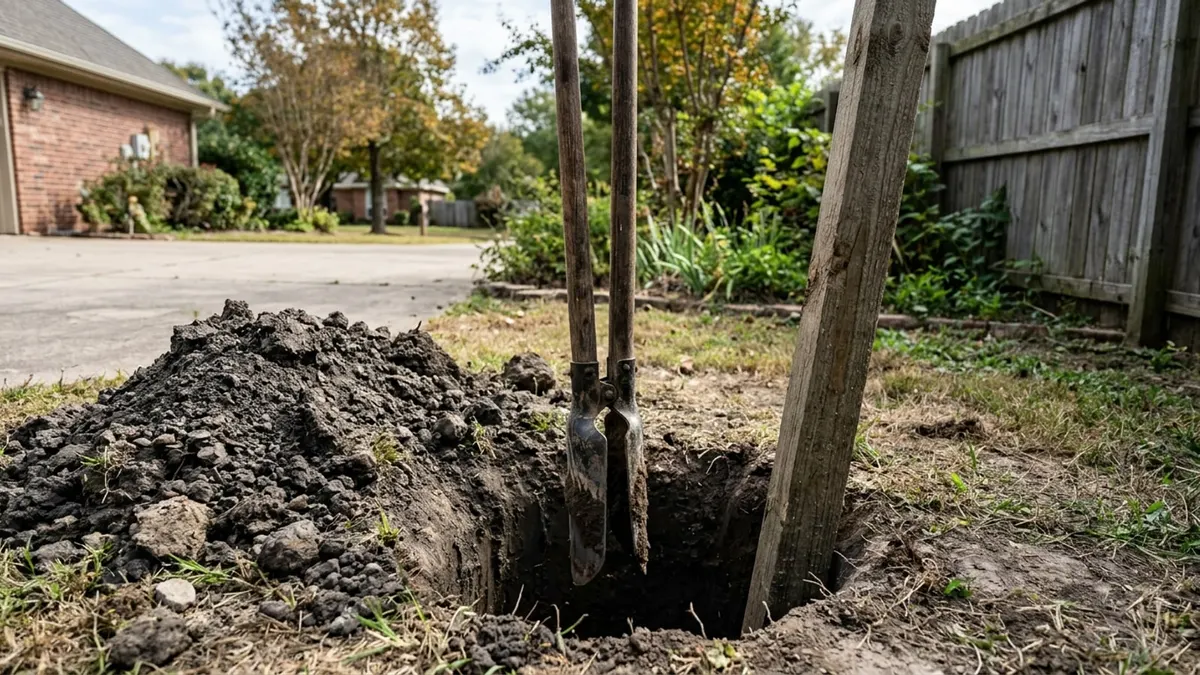
Cover image: Illustration: Construction Gear Review (AI-generated)
Related guides
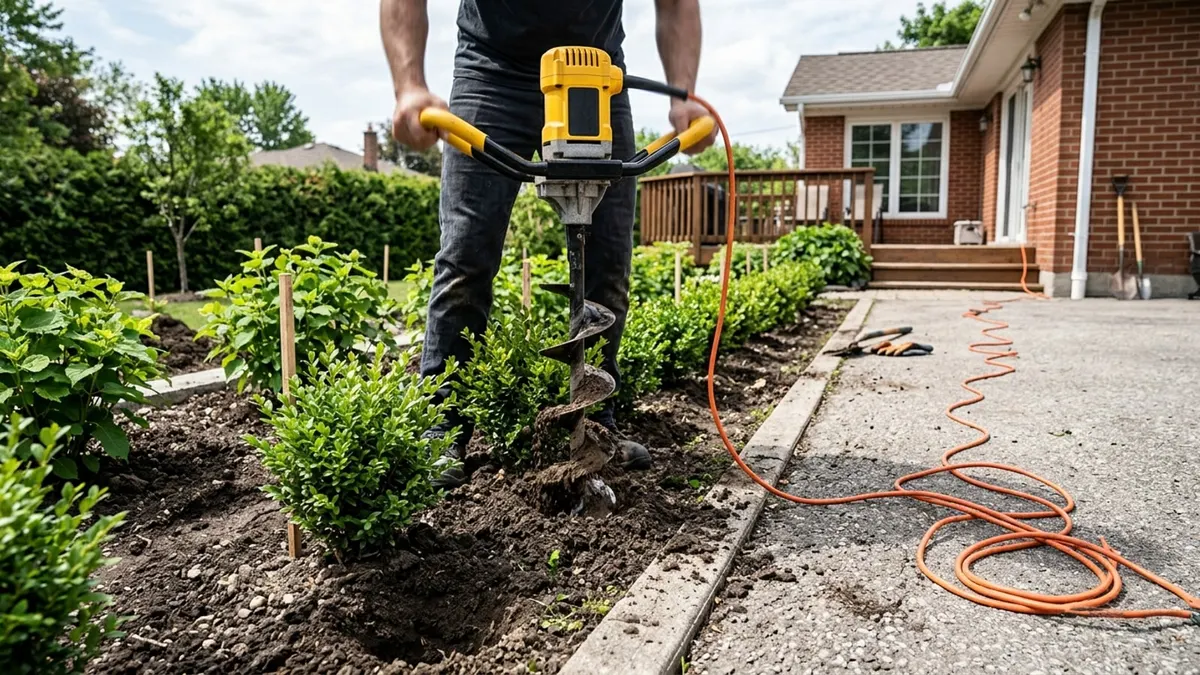
Electric Post Hole Diggers: Corded Augers for Fences and Planting (2026)
No gas, no mix, no pull cord: four corded augers and the jobs they suit.
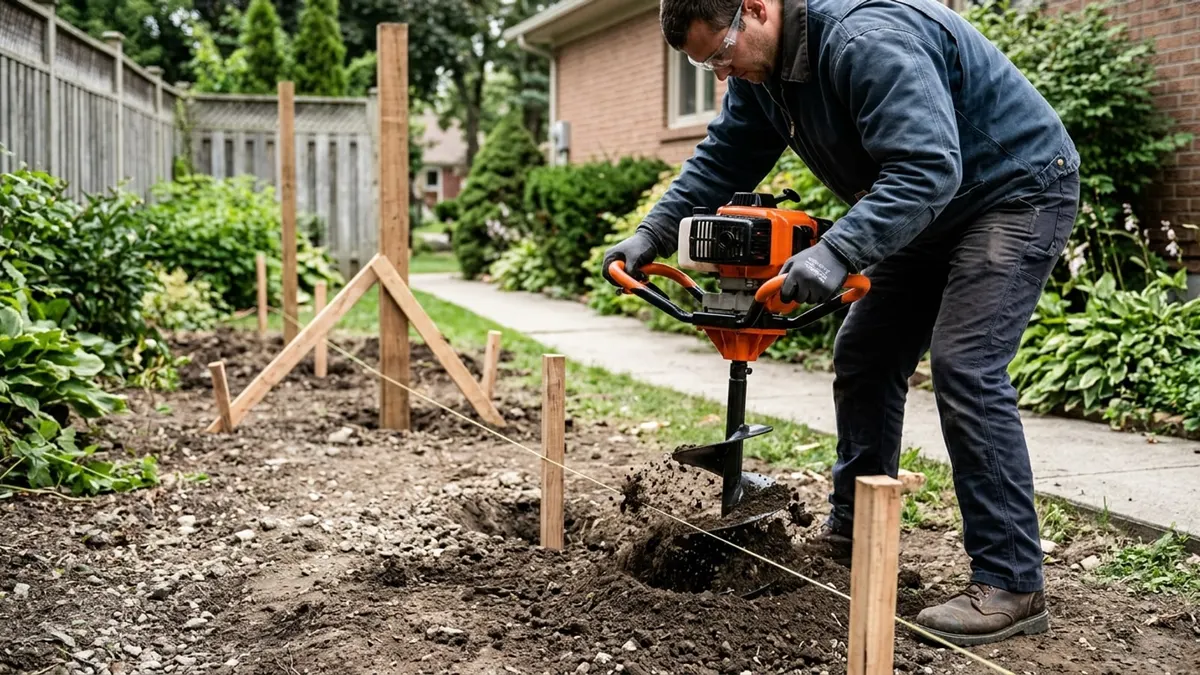
Gas Post Hole Diggers: The Best Earth Augers for Fences and Decks (2026)
Five gas augers from a 43cc one-person powerhead to a 72cc digger, plus which bits come in the box.
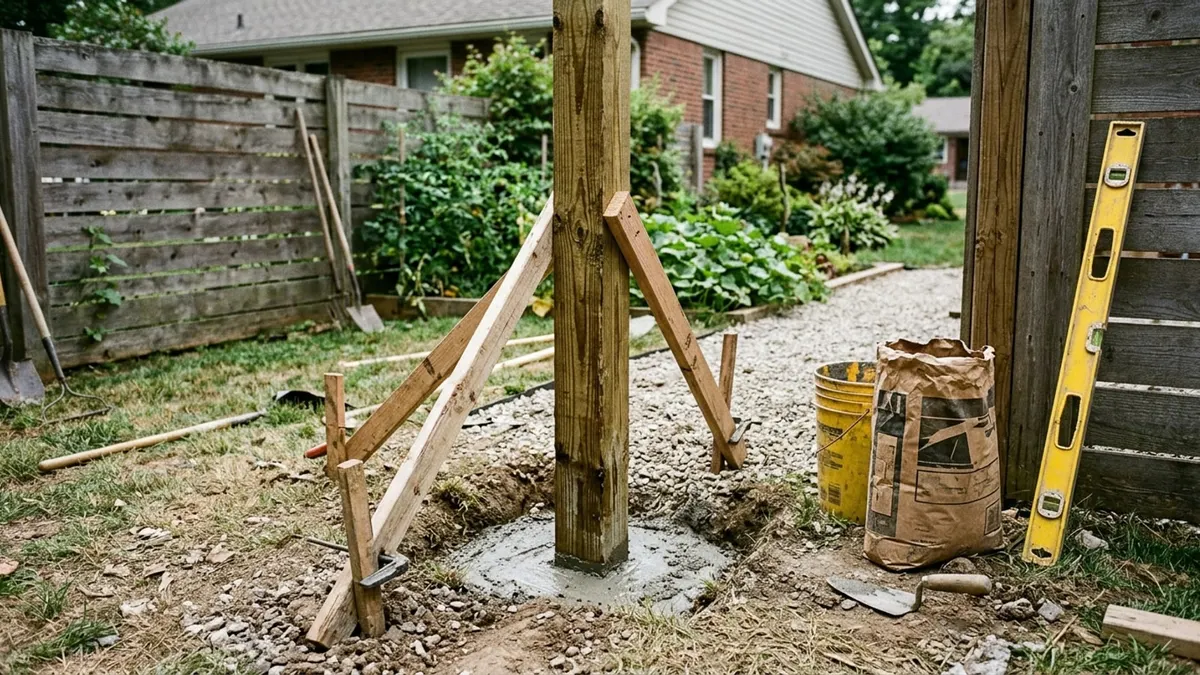
How Much Concrete per Fence Post: Bags by Hole Size and Depth
Bag counts for common post hole sizes, and why the post itself saves you a little concrete.