
Concrete Mixers for Home Projects: Drum and Poly Drum Cement Mixers (2026)
The best concrete mixers for home projects: steel and poly drum cement mixers from 4 to 7.1 cubic feet compared on motor, drum type and mixing capacity.
Affiliate disclosure: product links on this page go to Amazon or to the maker's own store. As an Amazon Associate we earn from qualifying purchases, at no extra cost to you; links to makers' own stores earn us nothing. No retailer or brand sees our picks before they are published or has any say in them. How we choose.
For post holes, footings and small pads, the concrete mixer to buy is the YARDMAX YM0115: a 4 cubic foot steel-drum mixer with a factory-assembled drive box, a wash-down rated motor and gearbox, and one-person assembly the maker puts at under 30 minutes. If you want a drum that will not dent or rust, the BILT HARD poly drum mixer lists a 2.3 cubic foot mixing capacity and flat-free tires.
Size by bags per batch: Quikrete says to allow at least 1 cubic foot of mixer capacity for each 80 lb bag mixed at one time.
Our top picks at a glance
- YARDMAX YM0115 4.0 cu ft concrete mixer
Drum: 4.0 cu ft · Motor: Not stated in listing text · Drum type: Solid steel
- BILT HARD 4 cu ft poly drum cement mixer
Drum: 4.0 cu ft drum, 2.3 cu ft mixing · Motor: 500 W, 120 V, 4.3 A · Drum type: Poly
- PHLEX PRO 5.3 cu ft poly drum cement mixer
Drum: 5.3 cu ft · Motor: 750 W (1 hp), 30 rpm drum · Drum type: Poly
- Hoteche 7.1 cu ft 850 W cement mixer
Drum: 7.1 cu ft · Motor: 850 W, 32 rpm drum · Drum type: Steel (1.6 mm lower, 1.2 mm upper)
5. Best steel-drum alternative
BILT HARD 4 cu ft electric cement mixerDrum: 4 cu ft (about 113 L) · Motor: 550 W, 120 V, 5 A; drum 26.7 rpm · Drum type: Powder-coated steel
| Pick | Drum | Motor | Drum type | Buy |
|---|---|---|---|---|
| YARDMAX YM0115 4.0 cu ft concrete mixerBest overall | 4.0 cu ft | Not stated in listing text | Solid steel | Amazon |
| BILT HARD 4 cu ft poly drum cement mixerBest poly drum | 4.0 cu ft drum, 2.3 cu ft mixing | 500 W, 120 V, 4.3 A | Poly | Amazon |
| PHLEX PRO 5.3 cu ft poly drum cement mixerBest mid-size | 5.3 cu ft | 750 W (1 hp), 30 rpm drum | Poly | Amazon |
| Hoteche 7.1 cu ft 850 W cement mixerBiggest drum | 7.1 cu ft | 850 W, 32 rpm drum | Steel (1.6 mm lower, 1.2 mm upper) | Amazon |
| BILT HARD 4 cu ft electric cement mixerBest steel-drum alternative | 4 cu ft (about 113 L) | 550 W, 120 V, 5 A; drum 26.7 rpm | Powder-coated steel | Amazon |
Best overall
YARDMAX YM0115 4.0 cu ft concrete mixer
A 4 cubic foot steel-drum mixer with a sealed motor and quick assembly.
- Drum
- 4.0 cu ft
- Motor
- Not stated in listing text
- Drum type
- Solid steel
Pros
- IP45 wash-down rated motor and gearbox
- Factory-assembled drive box
- Low profile for pouring into forms
Cons
- Few specs in the listing
- Steel drums dent and rust if neglected
YARDMAX lists a solid steel drum that cleans easily, an IP45 wash-down certified motor and gearbox, a factory-assembled motor drive box, one-person assembly in under 30 minutes, a steel handle with an iron ring and safety lock, and a low-profile height for pouring into forms and wheelbarrows. The YM0146 is the 5 cubic foot, 3/4 hp version.
Best poly drum
BILT HARD 4 cu ft poly drum cement mixer
A dent-proof poly drum with a stated 2.3 cubic foot mixing capacity and flat-free tires.
- Drum
- 4.0 cu ft drum, 2.3 cu ft mixing
- Motor
- 500 W, 120 V, 4.3 A
- Drum type
- Poly
Pros
- Poly drum resists dents, cracks and rust
- 10 in flat-free tires
- States real mixing capacity
Cons
- Smaller motor
BILT HARD lists a 500 W, 120 V, 4.3 A motor, a 4.0 cubic foot poly drum with a 2.3 cubic foot mixing capacity, a steel frame and 10 inch flat-free tires. That 2.3 figure is the useful one: about two 80 lb bags a batch at Quikrete's 1 cubic foot per bag rule.
Best mid-size
PHLEX PRO 5.3 cu ft poly drum cement mixer
A 5.3 cubic foot wheelbarrow-style poly drum mixer with a 750 W motor.
- Drum
- 5.3 cu ft
- Motor
- 750 W (1 hp), 30 rpm drum
- Drum type
- Poly
Pros
- Bigger drum and motor
- Wheelbarrow design moves easily
Cons
- Mixing capacity not stated
PHLEX PRO lists a 750 W (1 hp) copper-core motor turning the drum at 30 rpm, a 5.3 cubic foot heavy poly drum that resists dents, cracks and rust, and a wheelbarrow-style frame.
Biggest drum
Hoteche 7.1 cu ft 850 W cement mixer
A 7.1 cubic foot steel drum with an 850 W motor for larger batches.
- Drum
- 7.1 cu ft
- Motor
- 850 W, 32 rpm drum
- Drum type
- Steel (1.6 mm lower, 1.2 mm upper)
Pros
- Largest drum here
- Thicker lower drum
Cons
- Heavier to move
- Mixing capacity not stated
Hoteche lists an 850 W motor, a 7.1 cubic foot drum it says holds over 300 lb of material, a 1.6 mm lower drum and 1.2 mm upper drum, and a 32 rpm mixing speed.
Best steel-drum alternative
BILT HARD 4 cu ft electric cement mixer
A 4 cubic foot powder-coated steel mixer with a 550 W motor.
- Drum
- 4 cu ft (about 113 L)
- Motor
- 550 W, 120 V, 5 A; drum 26.7 rpm
- Drum type
- Powder-coated steel
Pros
- Motor and drum speed listed
- Powder-coated drum and frame
Cons
- Steel drum needs washing out promptly
BILT HARD lists a 550 W, 120 V, 5 A motor, a drum speed of 26.7 rpm, a 4 cubic foot (about 113 L) capacity, and a powder-coated cast metal and steel build.
How we chose
We compared drum size, stated mixing capacity, motor and drum material from the listings.
Size it by bags
Quikrete's data sheet says to allow at least 1 cubic foot of mixer capacity for each 80 lb bag mixed at one time. Drum size is not mixing size: BILT HARD's poly mixer has a 4.0 cubic foot drum but lists 2.3 cubic feet of mixing capacity. By Quikrete's rule a 4 cubic foot drum takes no more than four 80 lb bags, and a maker's stated mixing capacity can cut that to about two. Use the concrete calculator to count batches.
Steel or poly drum?
| Steel | Poly | |
|---|---|---|
| Durability | Tough but dents and rusts | Resists dents, cracks and rust |
| Cleaning | Hose out before concrete sets | Easier to clean |
| Examples | YARDMAX, Hoteche, BILT HARD steel | BILT HARD poly, PHLEX PRO |
Mixer or bags by hand?
Quikrete says its Concrete Mix can be mixed by hand in a wheelbarrow or tub. For one or two post holes that is fine; for a pad, a mixer saves your back. Past a cubic yard, compare a ready-mix delivery; see a yard of concrete.
Using it
Steps are in how to mix concrete. Quikrete's data sheet warns that the mix causes severe skin burns and serious eye damage: wear impervious gloves, such as nitrile, and eye protection.
What the batch size means for a pour
| Bags per batch | Concrete per batch | Batches per cubic yard |
|---|---|---|
| 2 | 1.2 cu ft | 23 |
| 3 | 1.8 cu ft | 15 |
| 4 | 2.4 cu ft | 12 |
A concrete mixer does not make a big pour quick. It makes each batch easier. At two bags a batch, a cubic yard is 23 loads of lifting, mixing and tipping, which is why the drum size and the stated mixing capacity matter more than the motor.
How long you have
The National Ready Mixed Concrete Association says concrete normally sets and hardens within two to eight hours of mixing, and Quikrete's slab method says to fill the forms working continuously from one end to the other, because partial-depth fills can leave cold joints. A mixer suits pours you can place in one go: post holes, footings, steps and small pads. For a slab that would take many hours of batches, a truck is the tool, and the association gives the truck's limits: mixers carry 8 to 12 cubic yards, and a loaded one weighs about 80,000 lb and may not manage loose dirt or a residential curb.
Water goes in first
Quikrete's order for a barrel mixer is water, then mix: about 6 pints per 80 lb bag into the drum, start the mixer, add the concrete, and add more water only if the batch is too stiff to turn, up to about 9 pints per bag. With a slump cone the target is 2 to 3 inches. The association's ordering guide gives the reason to hold back: excess water causes segregation, delays setting, raises the chance of cracking and cuts strength and durability.
Mortar and fast-setting mix
Quikrete's concrete sheet names a barrel-type concrete mixer or a mortar mixer for its Concrete Mix. Its Mortar Mix sheet names hand mixing or a paddle-type mortar mixer, with at least 5 minutes of mixing and about 5 quarts of water per 80 lb bag, so a drum mixer is not the machine it specifies for mortar. Fast-Setting Concrete Mix can go in a drum mixer at 3/4 cubic foot of capacity per 60 lb bag, but it sets in 20 to 40 minutes, so mix only what you can place at once.
After the last batch
Mixing is half the job. Quikrete says curing should start as soon as possible and continue for 5 days at 70 F or above, or 7 days between 50 and 70 F, and that concrete needs protecting from freezing for its first 48 hours. The National Ready Mixed Concrete Association puts a number on what is at stake: concrete left to dry out can lose as much as half its potential strength. Wash the drum out before the residue sets, then cover or wet the slab; the pour is not finished until it is curing.
One limit on the mix itself: Quikrete lists its Concrete Mix for pours 2 inches thick or more, so a thin patch or a skim coat needs a different product, not a wetter batch.
Frequently asked questions
What size concrete mixer do I need?
Quikrete says to allow at least 1 cubic foot of mixer capacity per 80 lb bag mixed at once. That caps a 4 cubic foot drum at four bags a batch, and a maker's stated mixing capacity can be lower: BILT HARD lists 2.3 cubic feet for its 4 cubic foot poly drum.
Is a steel or poly drum mixer better?
Poly drums resist dents and rust and clean more easily; steel drums are tough but need washing out promptly. Both mix concrete well.
How many bags of concrete can a 4 cubic foot mixer handle?
Up to four 80 lb bags by Quikrete's rule of 1 cubic foot of mixer per bag, and fewer where the maker states a mixing capacity: about two for BILT HARD, which lists 2.3 cubic feet of mixing capacity for its 4 cubic foot poly drum mixer.
Can you mix concrete without a mixer?
Yes. Quikrete says its Concrete Mix can be mixed by hand in a suitable container with a shovel, rake or hoe. A mixer saves time and effort on bigger pours.
Can I mix mortar in a concrete mixer?
Quikrete's Mortar Mix data sheet specifies hand mixing or a paddle-type mortar mixer, with at least 5 minutes of mixing. A drum mixer is the machine its Concrete Mix sheet names, so for a long block wall a mortar mixer is the better match.
Sources
- Concrete Mix No. 1101 data sheet, Quikrete
- Quikrete Concrete Mix product page, Quikrete
- Mortar Mix No. 1102 data sheet, Quikrete
- Fast-Setting Concrete Mix No. 1004-60 data sheet, Quikrete
- CIP 31: Ordering Ready Mixed Concrete, National Ready Mixed Concrete Association
- CIP 11: Curing In-Place Concrete, National Ready Mixed Concrete Association
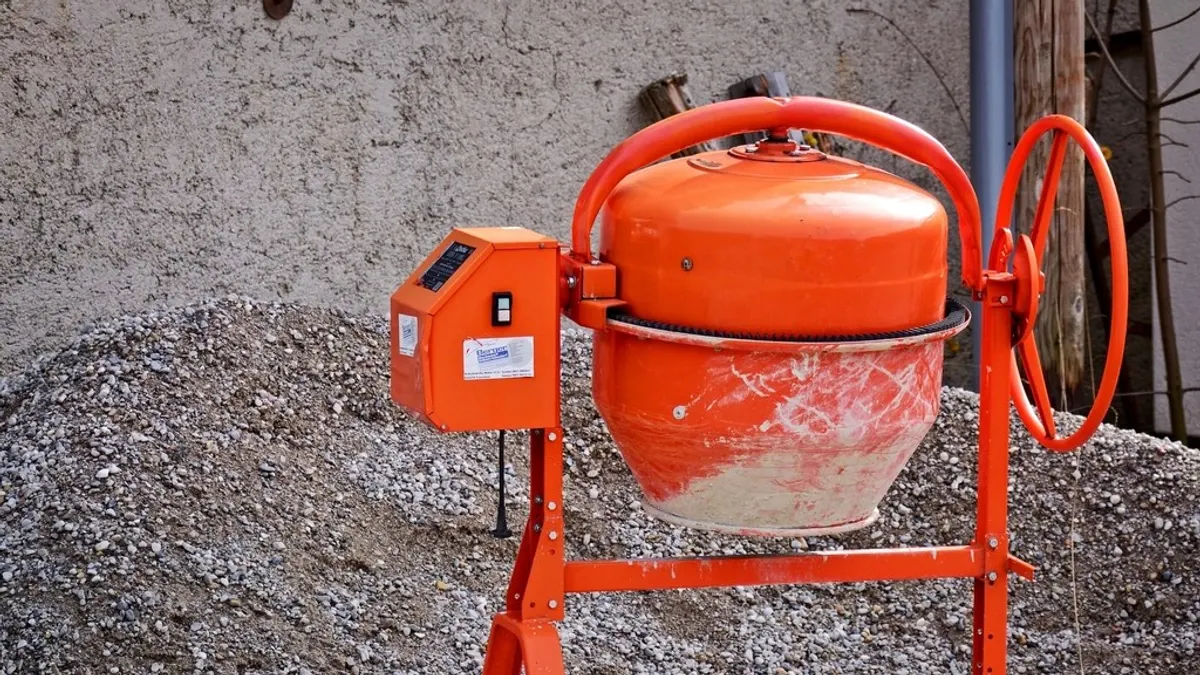
Cover photo: Orange concrete mixer machine, CC0 1.0, via rawpixel. Cropped.
Related guides
Concrete Block Calculator: How Many Cinder Blocks and Bags of Mortar
Blocks, 80 lb bags of mortar mix and courses for a standard 8 x 8 x 16 block wall.
Concrete Calculator: Cubic Yards and Bags for Slabs, Footings and Post Holes
Volume in cubic feet and yards, bag counts by size, and the weight of the wet concrete.
Concrete Saws for Homeowners: Electric, Gas Cut-Off and Walk-Behind (2026)
Wet cutting is the rule: four saws compared on cut depth, power, water and warranty.