
Rebar Cutters and Benders: Manual and Electric Tools for #3 to #5 Rebar (2026)
The best rebar cutters and benders: manual combination tools and electric benders for rebar up to 5/8 inch (#5), compared on capacity, bend angles and warranty.
Affiliate disclosure: product links on this page go to Amazon or to the maker's own store. As an Amazon Associate we earn from qualifying purchases, at no extra cost to you; links to makers' own stores earn us nothing. No retailer or brand sees our picks before they are published or has any say in them. How we choose.
For footings, a slab or a block wall, the rebar tool to buy is the H.K. Porter 0590RBJN: a manual cutter and bender with shear-cut blades that cuts and bends rebar up to 5/8 inch (#5) to 90 or 180 degrees and mounts on a flat surface. If you cut and bend a lot, Metabo HPT's VB16Y does it electrically, rated for #5 Grade 60 rebar with a 5-year warranty.
Our top picks at a glance
- H.K. Porter 0590RBJN rebar cutter and bender
Capacity: Up to 5/8 in (#5) · Cuts: Yes, shear-cut blades · Bends: 90 or 180 degrees · Power: Manual
- BN Products MBC-16B manual rebar bender and cutter
Capacity: Grade 60 (size per listing) · Cuts: Yes, replaceable jaws · Bends: Adjustable 2-1/2 in roller · Power: Manual
- Metabo HPT VB16Y electric rebar bender and cutter
Capacity: #5 (5/8 in) Grade 60 · Cuts: Yes · Bends: Up to 180 degrees, preset dial · Power: 8 A, 120 V
- CENTALL HRB16 electric hydraulic rebar bender
Capacity: 1/4 to 5/8 in (6 to 16 mm) · Cuts: No · Bends: One-button, eccentric head · Power: 1,100 W, 110 V
- Noliven manual rebar bender and cutter
Capacity: Up to 5/8 in · Cuts: Yes · Bends: 0 to 180 degrees · Power: Manual
| Pick | Capacity | Cuts | Bends | Power | Buy |
|---|---|---|---|---|---|
| H.K. Porter 0590RBJN rebar cutter and benderBest overall | Up to 5/8 in (#5) | Yes, shear-cut blades | 90 or 180 degrees | Manual | Amazon |
| BN Products MBC-16B manual rebar bender and cutterBest manual for Grade 60 | Grade 60 (size per listing) | Yes, replaceable jaws | Adjustable 2-1/2 in roller | Manual | Amazon |
| Metabo HPT VB16Y electric rebar bender and cutterBest electric | #5 (5/8 in) Grade 60 | Yes | Up to 180 degrees, preset dial | 8 A, 120 V | Amazon |
| CENTALL HRB16 electric hydraulic rebar benderBest electric bender only | 1/4 to 5/8 in (6 to 16 mm) | No | One-button, eccentric head | 1,100 W, 110 V | Amazon |
| Noliven manual rebar bender and cutterBest budget manual | Up to 5/8 in | Yes | 0 to 180 degrees | Manual | Amazon |
Best overall
H.K. Porter 0590RBJN rebar cutter and bender
A steel manual cutter-bender for rebar up to 5/8 inch, bending to 90 or 180 degrees.
- Capacity
- Up to 5/8 in (#5)
- Cuts
- Yes, shear-cut blades
- Bends
- 90 or 180 degrees
- Power
- Manual
Pros
- Mounts on a flat surface for leverage
- Steel construction
Cons
- Hard work at full capacity
H.K. Porter (Crescent) lists shear-cut blades, cutting and bending to 90 or 180 degrees, mounting on most flat surfaces for leverage and safety, a maximum rebar size of 5/8 inch and steel construction.
Best manual for Grade 60
BN Products MBC-16B manual rebar bender and cutter
A cam-action manual tool with a long handle for cutting and bending Grade 60 rebar.
- Capacity
- Grade 60 (size per listing)
- Cuts
- Yes, replaceable jaws
- Bends
- Adjustable 2-1/2 in roller
- Power
- Manual
Pros
- Cam mechanism adds leverage
- Replaceable cutting jaws
- Lifting chain
Cons
- 51 lb and 61 in long (per the Amazon listing)
BN Products lists a longer handle and cam mechanism for leverage on Grade 60 rebar, an adjustable 2-1/2 inch bending roller, replaceable cutting jaws with two open slots, a 12 inch no-slip grip and a lifting chain.
Best electric
Metabo HPT VB16Y electric rebar bender and cutter
An 8 amp portable cutter-bender for #5 Grade 60 rebar with preset angles.
- Capacity
- #5 (5/8 in) Grade 60
- Cuts
- Yes
- Bends
- Up to 180 degrees, preset dial
- Power
- 8 A, 120 V
Pros
- 5-year warranty
- Variable speed trigger with safety lock
Cons
- Pro price
- 39.7 lb
Metabo HPT lists an 8 amp, 120 V motor that bends up to No. 5 (5/8 inch) Grade 60 rebar to a maximum of 180 degrees and cuts up to #5, a variable speed trigger with a safety lock, a preset angle dial, a 39.7 lb weight and a 5-year warranty. Its own page lists two sets of cycle times (2.5 or 3.1 seconds to cut, 4.3 or 5.1 to bend).
Best electric bender only
CENTALL HRB16 electric hydraulic rebar bender
A 1,100 W hydraulic bender for 1/4 to 5/8 inch rebar; bending only.
- Capacity
- 1/4 to 5/8 in (6 to 16 mm)
- Cuts
- No
- Bends
- One-button, eccentric head
- Power
- 1,100 W, 110 V
Pros
- Fast bends (2.5 s per the title)
- One-button operation
Cons
- Does not cut
CENTALL lists a 1,100 W copper motor, a 13 ton hydraulic bending head with an eccentric wheel for different rebar sizes, rebar from 1/4 to 5/8 inch, one-button operation and front and rear handles.
Best budget manual
Noliven manual rebar bender and cutter
A 2-in-1 manual tool for rebar up to 5/8 inch, bending 0 to 180 degrees.
- Capacity
- Up to 5/8 in
- Cuts
- Yes
- Bends
- 0 to 180 degrees
- Power
- Manual
Pros
- Lower price
- Removable shears
Cons
- Sparse specs on the listing
The listing describes a manual 2-in-1 tool with a leverage system for cutting and bending from 0 to 180 degrees, alloy steel with hardened jaws, and capacity up to 5/8 inch rebar.
How we chose
We compared capacity, cutting and bending ability, bend angles and power from the makers' listings and Metabo HPT's product page.
Rebar sizes
US rebar sizes are in eighths of an inch: #3 is 3/8 inch, #4 is 1/2 inch, #5 is 5/8 inch. All the tools here handle up to #5, which covers most residential footings and walls; check your plans for size and grade.
Manual or electric
- Manual suits a footing or wall: a few dozen cuts and bends.
- Electric pays off for volume, Grade 60 bar at full size, or repeated identical bends.
- An angle grinder or cut-off saw also cuts rebar, with more sparks and noise.
Cap or bend protruding rebar
OSHA's construction rule (29 CFR 1926.701(b)) requires protruding rebar that someone could fall onto to be guarded against impalement. OSHA has said small mushroom-style plastic caps are for scratch protection, not impalement, and that rebar properly capped or bent over 90 degrees does not present an impalement hazard. At home, cap exposed bar with impalement-rated covers or bend it over.
Plan the concrete with the concrete calculator and the wall with the block calculator.
What OSHA accepts as a cap
The cap rule has more detail than the regulation's one sentence. In a 1997 memorandum OSHA said the standard mushroom-style plastic rebar caps should not be used for protection against impalement, and that covers or wooden troughs able to withstand at least 250 lb dropped from 10 feet should be used instead; it noted that steel-reinforced covers and wooden troughs were available. A 2006 letter repeated the point: what the industry calls mushroom caps typically protect only against abrasions and cuts. The same letter says the standard sets no minimum cap diameter. The test is whether the cover spreads the force of a fall.
Bending it out of the way
Bending is the other answer, and a bender makes it easy. In another 2006 letter OSHA said that rebar bent to horizontal, with the bent part 6 inches above grade, is not an impalement hazard, and that bar bent over 12 inches above grade would not normally be one. Where your plans allow the bar to be bent, bending exposed ends over low to the ground is an alternative to capping them.
Capacity against the bar
| Tool | Largest bar | Cuts | Notes |
|---|---|---|---|
| H.K. Porter 0590RBJN | 5/8 in (#5) | Yes | Manual; bends to 90 or 180 degrees |
| BN Products MBC-16B | Grade 60, size per listing | Yes | Manual; cam action, replaceable jaws |
| Metabo HPT VB16Y | #5 Grade 60 | Yes | Electric, 8 amp; preset angles to 180 degrees; 39.7 lb |
| CENTALL HRB16 | 5/8 in (16 mm) | No | Electric hydraulic; bends only |
| Noliven 2-in-1 | 5/8 in | Yes | Manual; 0 to 180 degrees |
Metabo HPT states its figure for Grade 60 bar, and BN Products builds its lever for it. A capacity given without a grade is best read as a size the tool will take, not a promise about harder bar. If your plans call for Grade 60 at #5, choose a tool that names both.
Rebar and the pour
Bar spacing affects the concrete you order. The National Ready Mixed Concrete Association says the coarse aggregate should be smaller than the narrowest gap the concrete has to flow through, including the spacing of reinforcing steel, and that 3/4 or 1 inch aggregate is usual. What size, grade and spacing a footing or wall needs is a matter for your plans and local code.
What the rule says, word for word
The regulation itself is one sentence: all protruding reinforcing steel, onto and into which employees could fall, shall be guarded to eliminate the hazard of impalement. OSHA's 2006 letter adds that the rule covers rebar only, not other sharp projections. It applies to employers, but the hazard is the same in a back yard.
Working with the manual tools
H.K. Porter says its cutter-bender mounts on most flat surfaces, for leverage and for safety; bolted to a plank or a bench it stays put while you pull. BN Products lengthened the handle and added a cam for the same reason. Metabo HPT's electric tool replaces the pull with a trigger, and its page gives cycle times of a few seconds for a cut or a bend, in two sets of figures.
Metabo HPT lists the VB16Y's motor at 8 amps and the tool at 39.7 lb, so it runs from an ordinary household circuit and one person can carry it to the bar instead of carrying the bar to it.
Frequently asked questions
What is the best rebar cutter for a homeowner?
A manual combination cutter-bender like the H.K. Porter 0590RBJN, which cuts and bends rebar up to 5/8 inch (#5) to 90 or 180 degrees.
What size rebar can a manual cutter cut?
The tools here are rated up to 5/8 inch (#5). Grade 60 bar at full size takes the most effort; BN Products' cam mechanism adds leverage for it.
Is an electric rebar bender worth it?
For volume or repeated identical bends, yes. Metabo HPT's VB16Y bends and cuts #5 Grade 60 rebar with preset angles and a 5-year warranty.
Do I need to cap exposed rebar?
On job sites, OSHA requires protruding rebar that someone could fall onto to be guarded against impalement; capped with impalement-rated covers or bent over 90 degrees. It is good practice at home too.
Are plastic mushroom caps enough for exposed rebar?
Not for impalement, by OSHA's reading. A 1997 OSHA memorandum says standard mushroom-style plastic caps should not be used against impalement and calls for covers or wooden troughs that withstand 250 lb dropped from 10 feet. A 2006 letter says mushroom caps typically protect only against cuts and abrasions.
Sources
- VB16Y Portable Rebar Bender and Cutter, Metabo HPT
- 1926.701 General requirements (concrete and masonry construction), OSHA
- Mushroom Style Plastic Rebar Covers Used For Impalement Protection (memorandum, May 29, 1997), OSHA
- Whether rebar caps and covers are subject to a minimum size requirement (letter, April 24, 2006), OSHA
- Impalement from reinforcing steel protruding horizontally (letter, March 10, 2006), OSHA
- CIP 31: Ordering Ready Mixed Concrete, National Ready Mixed Concrete Association
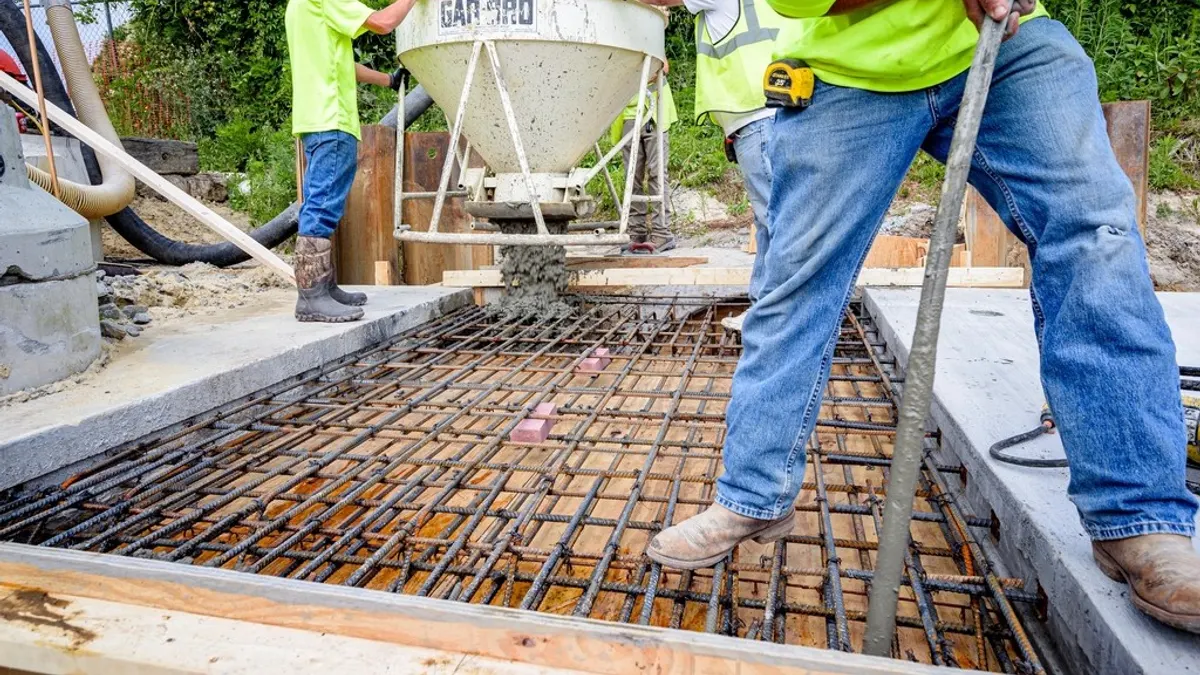
Cover photo: Engineers inspect portion new culvert, CC0 1.0, via rawpixel. Cropped.
Related guides
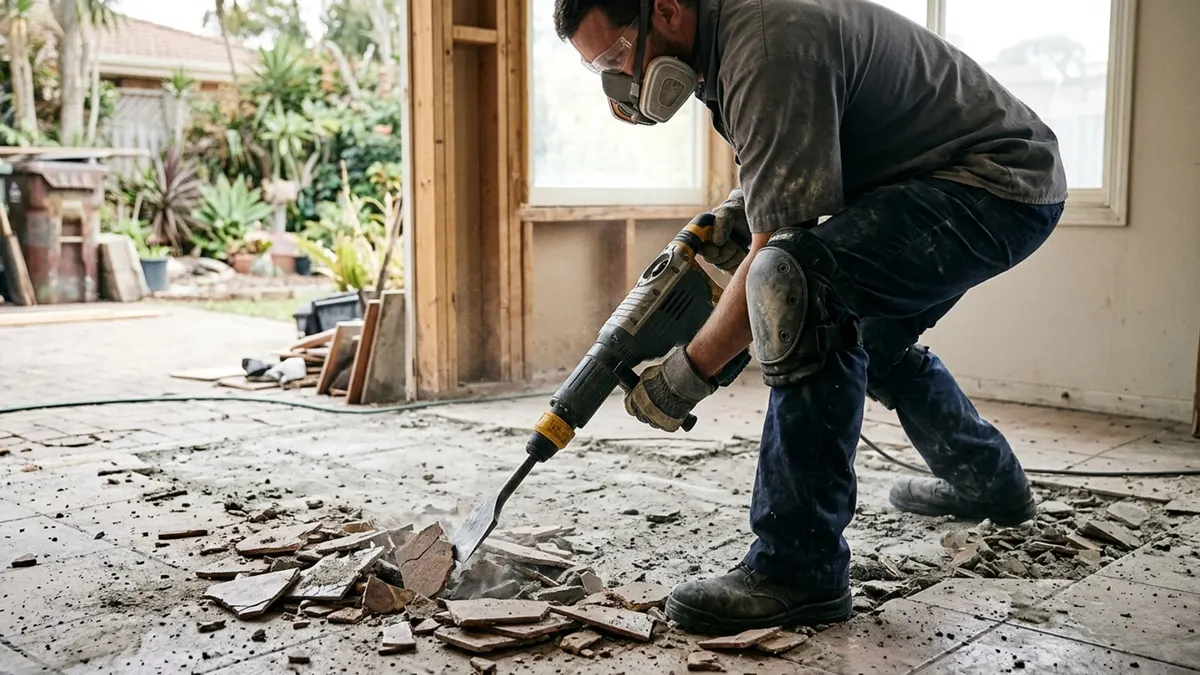
Demolition Hammers for Tile Removal and Chipping: SDS-Max and Hex (2026)
From a 13 lb tile breaker to a 35 lb hex hammer, matched to the job and the bit system.
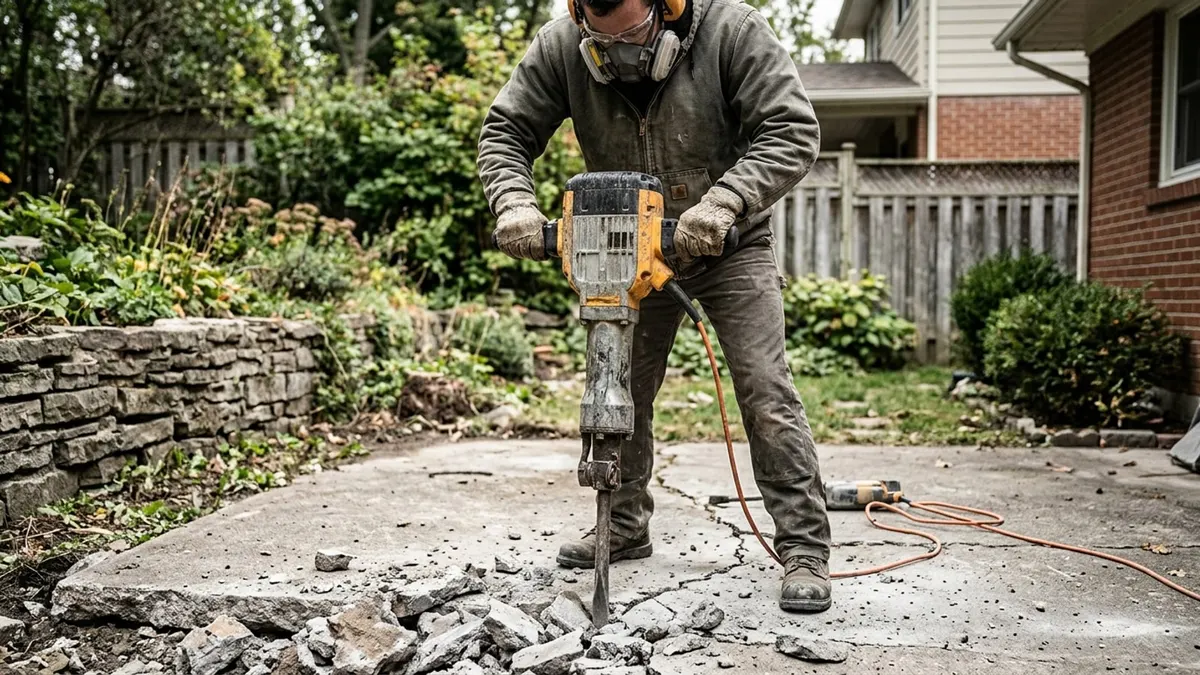
Electric Jackhammers for Breaking Concrete: Breaker Hammers Compared (2026)
Pro breaker hammers with measured impact energy, budget hammers with bigger claims, and how to tell the difference.
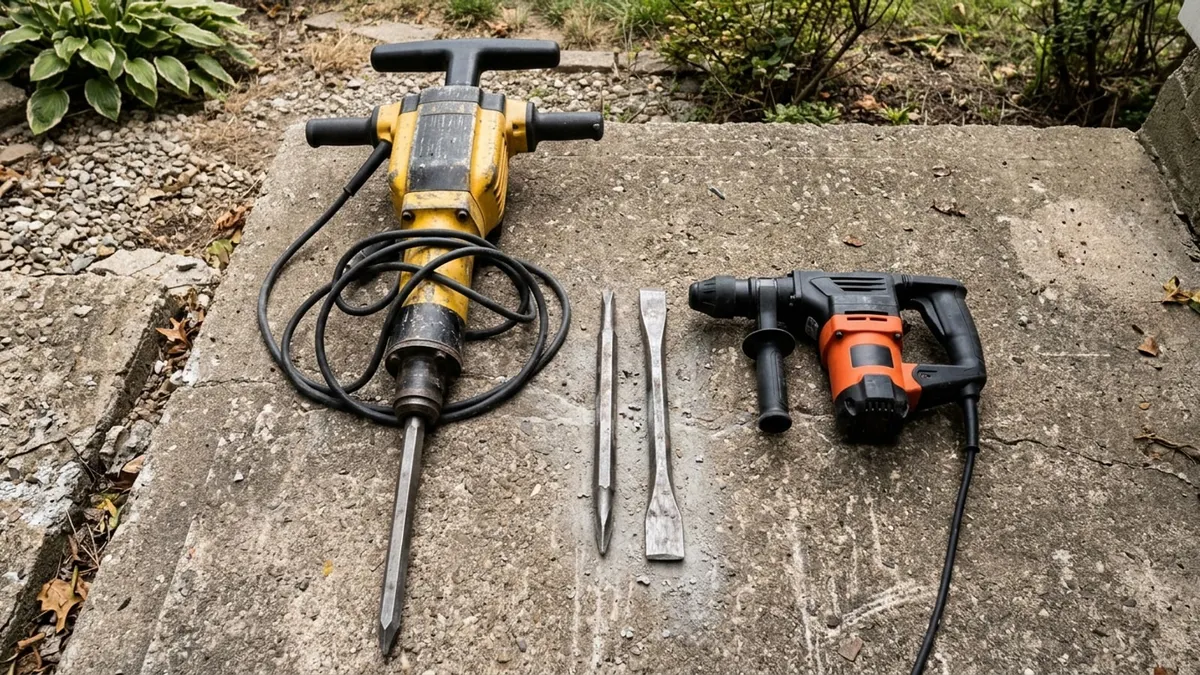
Jackhammer vs Demolition Hammer: Which One Does Your Job Need?
Breakers use their weight to smash slabs; demolition hammers chip, scrape and work on walls.