
Construction Equipment for Homeowners: What to Buy or Rent for Each Project
Construction equipment for homeowners by project: fences, slabs, patios, trenches, demolition and digging, what to buy or rent, and safety first.
Affiliate disclosure: product links on this page go to Amazon or to the maker's own store. As an Amazon Associate we earn from qualifying purchases, at no extra cost to you; links to makers' own stores earn us nothing. No retailer or brand sees our picks before they are published or has any say in them. How we choose.
Most homeowner site work comes down to six machines: a post hole auger, a concrete mixer, a plate compactor, a trencher, a jackhammer or demolition hammer, and a mini excavator. Buy the ones you will use on several projects (an auger, a mixer, a tamper); rent the big or specialized ones for a single job (a mini excavator, a power trowel, a large compactor). And call 811 before any digging.
By project
| Project | Machine | Buy or rent | Guide |
|---|---|---|---|
| Fence or deck posts | Gas or electric auger | Buy for a long fence | Post hole diggers |
| Small pad or footings | Drum mixer | Buy | Concrete mixers |
| Garage or shop slab | Ready-mix, power trowel | Rent the trowel | Power trowels |
| Paver patio | Plate compactor | Buy for repeat projects; rent heavier for driveways | Pavers |
| Water or power line trench | Trencher | Depends on length | Trenchers |
| Breaking out a slab | Electric jackhammer | Buy one if you will use it again | Jackhammers |
| Tile removal, chipping | Demolition hammer | Buy | Demolition hammers |
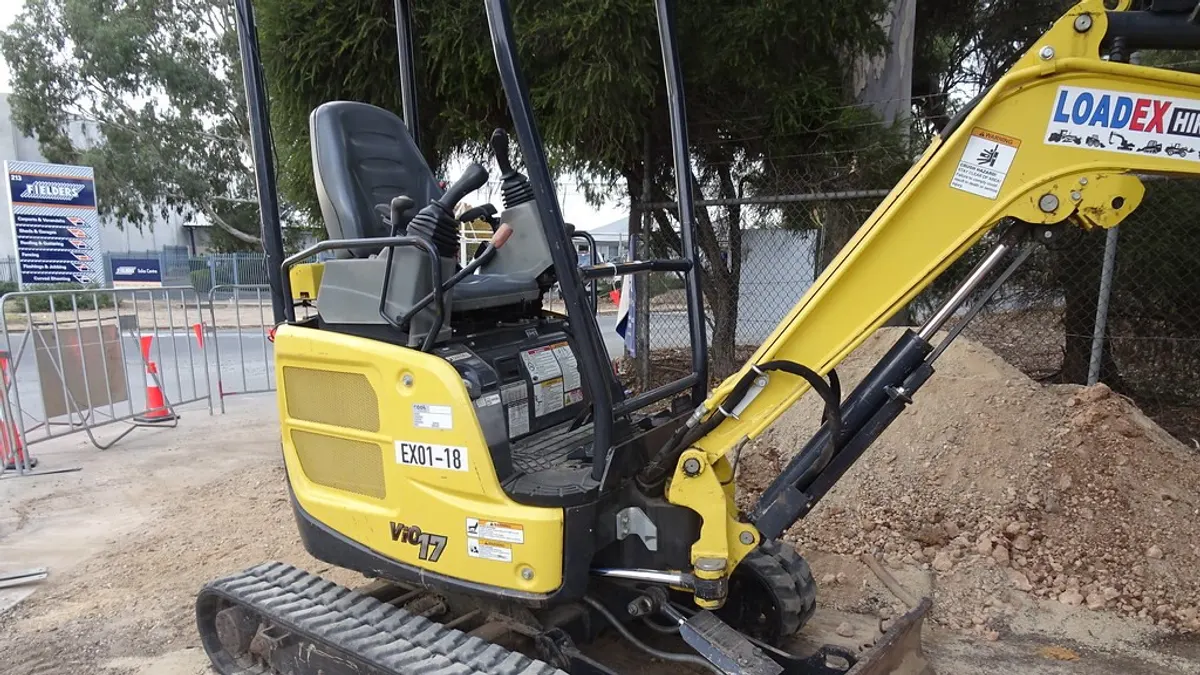
| Drainage, stumps, grading | Mini excavator | Rent unless you have ongoing work | Rent or buy |
| Block wall | Mixer, saw | Buy the mixer | Block calculator |
Planning the materials
- Concrete calculator: an 80 lb bag of Quikrete Concrete Mix makes about 0.60 cubic feet.
- Gravel calculator: about 1.35 tons per cubic yard for 3/4 inch crushed stone (loose).
- Block calculator: 1.125 standard blocks per square foot.
What each machine needs from you
Power is the first thing to check. Evolution fits its 14 inch concrete saw with a 20 amp plug and says it will not run on a 15 amp outlet. Bosch says its breaker runs on a 15 amp outlet or a 2,500 W generator, while budget breakers listed at 2,200 W work out to 18 to 20 amps (our arithmetic). Gas augers are two-stroke and need mixed fuel, at ratios that differ by maker: VEVOR lists 40 to 1 and NEO-TEC 25 to 1.
Where you live matters for small engines. California regulates spark-ignition engines of 19 kilowatts or less as small off-road engines, a class that covers most of the gas equipment on this site, and some listings say they cannot ship there. NEO-TEC's 72cc digger is one. Check the listing before you order.
What the big rental costs
The mini excavator is the machine most worth renting, and rental marketplace DOZR publishes a range from its own quotes. Its 2026 guide, based on 1,193 quotes in the United States and Canada, puts the 1.5 to 4 ton class at $150 to $400 a day, $450 to $1,200 a week and $1,200 to $3,200 a month. Across all sizes in its data a week costs about what three days do, so a job that will take three days or more is cheaper booked by the week. Ask whether delivery and pickup are in the quote.
Three projects in order
A fence. Contact 811 and wait for the marks. Dig each hole about three times the post's width and a third of the post's length deep, which is Quikrete's rule. Set the post, fill with concrete, slope the top away from the post, and leave it 24 hours before hanging anything on it. Fast-setting mix shortens that wait to 4 hours.
A paver patio. Contact 811, dig out, and compact the soil. Spread and compact the base in lifts of 4 to 6 inches to a compacted depth of at least 4 inches, screed an inch of bedding sand, lay the pavers, make two passes with the plate compactor, then sweep in dry joint sand and compact again until the joints are full. That sequence is the paver industry association's.
A small slab. Compact the sub-base, set and stake the forms, and dampen the ground. Place the concrete continuously from one end, strike it off, float it, edge it and cut control joints every 6 to 8 feet. Wait for the surface water to go before troweling, then cure it for 5 to 7 days. Those are Quikrete's steps for its bagged mix.
When the concrete comes by truck
Past about a cubic yard, most people stop mixing bags. The National Ready Mixed Concrete Association's ordering guide says truck mixers carry 8 to 12 cubic yards, that you should order 4 to 10 percent more than your estimate, and that a loaded truck weighs about 80,000 lb and may not manage loose dirt or a residential curb. That last point is where a power wheelbarrow or a second helper comes in, and the reason to have the forms, the tools and the trowel on site before the truck is.
The heavier machine you rent
Two rentals come up again and again in the guides. For a driveway base, the paver industry compacts with a 7,000 lbf reversible plate, heavier than any homeowner compactor on this site. For a garage slab, a 36 inch power trowel is used for one afternoon. Renting either for the day costs less than owning one that sits for years.
The safety steps that come first
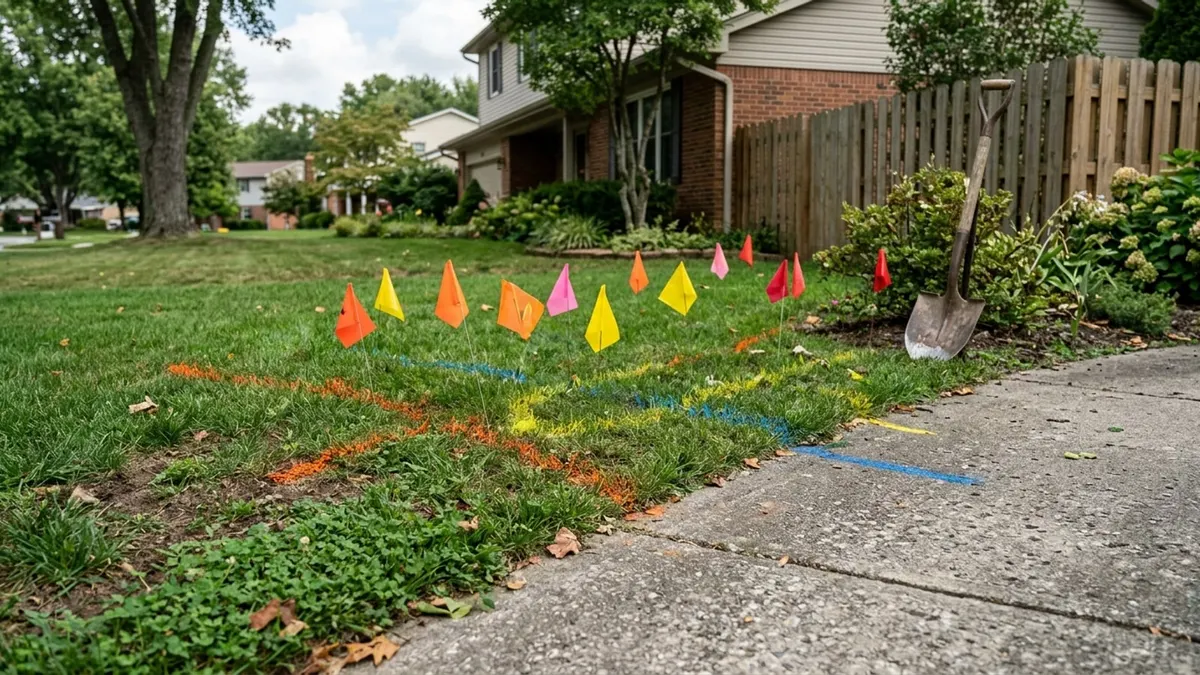
- 811: contact the free before-you-dig service a few business days ahead of any digging. See 811 before you dig.
- Trenches: OSHA requires protective systems for trenches 5 feet deep or more and names cave-ins as the greatest risk.
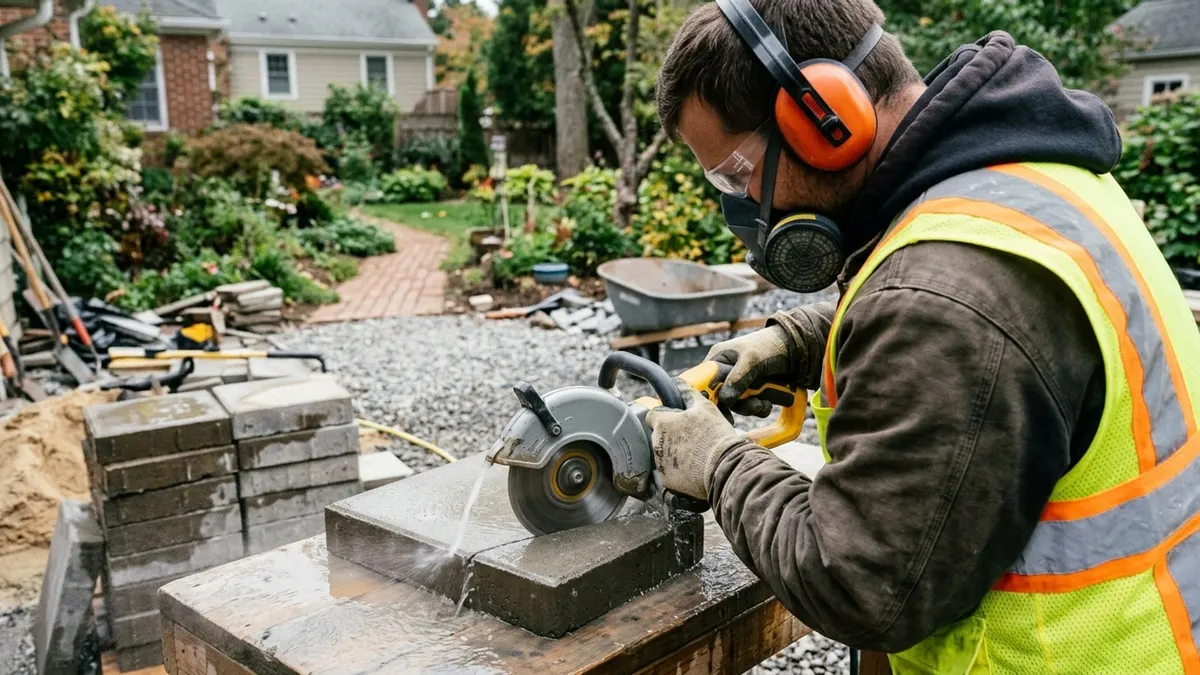
- Silica: cut concrete wet and wear a respirator for dusty work. See silica dust safety.
- Engines: run gas equipment outdoors, away from windows and doors.
- Protective gear: eye and hearing protection, gloves and boots for every machine here.
Frequently asked questions
What construction equipment should a homeowner own?
The tools you will reuse: a post hole auger, a small concrete mixer, a hand tamper and perhaps a plate compactor or demolition hammer. Rent big or specialized machines for single jobs.
Should I rent or buy a mini excavator?
Rent for a single project. Buy only with weeks of ongoing work, a trailer and storage. See our rent or buy guide.
What do I need to pour a concrete pad?
Forms, a compacted base (plate compactor or tamper), concrete (bags and a mixer for small pads, ready-mix for larger), and finishing tools. The concrete calculator gives bag counts.
What should I do before any digging project?
Contact 811 a few business days ahead so utilities can mark buried lines, and wait for all of them to respond.
How much does it cost to rent a mini excavator?
Rental marketplace DOZR's 2026 guide, based on its own quotes, puts 1.5 to 4 ton machines at $150 to $400 a day, $450 to $1,200 a week and $1,200 to $3,200 a month. Get a local quote that includes delivery and pickup.
Sources
- 811 Before You Dig, Common Ground Alliance
- Trenching and Excavation Safety fact sheet, OSHA
- OSHA's Respirable Crystalline Silica Standard for Construction (fact sheet), OSHA
- Excavator Rental Cost: 2026 Pricing Guide, DOZR
- Small Off-Road Engines (SORE), California Air Resources Board
- Concrete Mix No. 1101 data sheet, Quikrete
- PAV-TEC-002: Construction of Interlocking Concrete Pavements, Concrete Masonry and Hardscapes Association
- CIP 31: Ordering Ready Mixed Concrete, National Ready Mixed Concrete Association
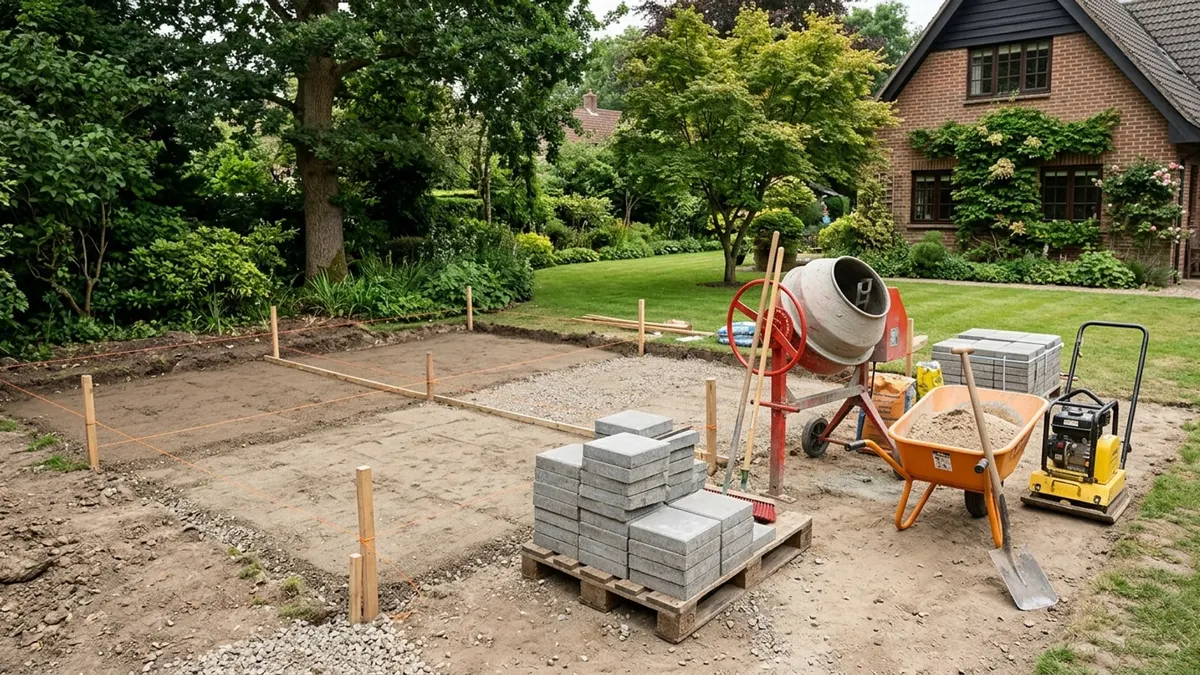
Cover image: Illustration: Construction Gear Review (AI-generated)
Related guides
Call 811 Before You Dig: How It Works and What the Marks Mean for You
The free call or click that gets buried lines marked, and the trench rules that keep you alive.
Rent or Buy a Mini Excavator? How to Decide for Your Property
A simple way to decide: count the days of digging, then add hauling, storage and upkeep to the purchase.
Silica Dust When Cutting or Breaking Concrete: How to Protect Yourself
Why concrete dust is dangerous, and the water, vacuum and respirator steps OSHA's standard is built on.